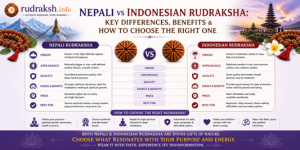
Rudraksha beads have been revered for centuries for their spiritual, healing, and protective properties. Whether you are seeking inner peace, better focus, or astrological remedies, choosing the right Rudraksha is essential. One of the most common questions people ask is: What is the difference between Nepali and Indonesian Rudraksha?
While both originate from the same sacred tree species (Elaeocarpus ganitrus), their characteristics, energy, and usage differ in subtle but important ways. Let’s explore these differences in a simple and practical way.
1. Origin and Growth Conditions
The primary difference lies in their place of origin:
- Nepali Rudraksha grows in the Himalayan region of Nepal.
- Indonesian Rudraksha (also known as Java Rudraksha) grows in Indonesia.
The climate and soil conditions significantly impact the size, texture, and overall energy of the beads.
2. Size and Appearance
This is the most noticeable difference:
- Nepali Rudraksha:
Larger in size, bold appearance, and deeply defined mukhi (lines). - Indonesian Rudraksha:
Smaller, smoother, and the mukhi lines are finer and less prominent.
If you prefer a visually strong and traditional look, Nepali beads stand out. Indonesian beads, on the other hand, are subtle and lightweight—ideal for daily wear.
3. Surface Texture
- Nepali Rudraksha: Rough, textured surface with natural grooves.
- Indonesian Rudraksha: Smoother surface, often with a more polished feel.
Both are natural, but their outer appearance differs due to environmental growth factors.
4. Energy and Effectiveness
A common myth is that one is more powerful than the other. In reality:
- Both Nepali and Indonesian Rudraksha carry the same spiritual energy.
- The effectiveness depends more on authenticity and proper energization than origin.
However, some practitioners believe:
- Nepali Rudraksha may have a slightly stronger or more immediate effect due to its larger size and density.
- Indonesian Rudraksha offers a gentler, more subtle influence over time.
5. Weight and Comfort
- Nepali Rudraksha: Heavier due to larger size.
- Indonesian Rudraksha: Lightweight and comfortable for long-term wear.
If you plan to wear Rudraksha daily, especially in malas or bracelets, Indonesian beads are often preferred for comfort.
6. Availability and Price
- Nepali Rudraksha:
Less abundant, higher demand → generally more expensive. - Indonesian Rudraksha:
More widely available → comparatively affordable.
This makes Indonesian Rudraksha a great choice for beginners or bulk use in malas.
7. Mukhi Clarity
- Nepali Rudraksha: Clear, deep, and easily countable mukhis.
- Indonesian Rudraksha: Fine lines that may require careful observation.
For collectors or those seeking specific mukhi beads, Nepali Rudraksha is often easier to identify.
8. Which Rudraksha Should You Choose?
There is no “better” option—only what suits your needs:
- Choose Nepali Rudraksha if you want:
- Strong visual presence
- Deep, well-defined mukhis
- Traditional and premium feel
- Choose Indonesian Rudraksha if you want:
- Lightweight and comfortable beads
- Budget-friendly options
- Subtle energy for daily wear
Important Tip: Authenticity Matters More Than Origin
No matter which type you choose, always ensure the Rudraksha is:
- Natural and untreated
- Properly certified (if possible)
- Energized before wearing
A genuine Rudraksha—whether Nepali or Indonesian—will always be beneficial when worn with faith and correct guidance.
Both Nepali and Indonesian Rudraksha hold immense spiritual value and can positively impact your life. The difference lies mainly in size, appearance, and comfort—not in their divine essence.
Instead of focusing on which is superior, focus on authenticity, suitability, and your personal intention. That is what truly unlocks the power of Rudraksha.










Comments