
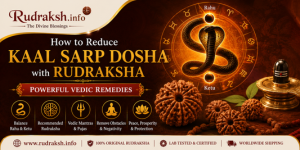
. It occurs when all the seven classical planets (Sun, Moon, Mars, Mercury, Jupiter, Venus, and Saturn) are positioned between Rahu and Ketu in a birth chart. While many people fear this yoga, modern astrologers agree that its effects vary greatly depending on the complete horoscope and should never be judged by this factor alone.
Many individuals experiencing repeated obstacles, delayed success, emotional stress, or unexpected life challenges seek spiritual remedies to reduce the perceived effects of Kaal Sarp Dosha. Among the most respected remedies in Vedic traditions is wearing an appropriate Rudraksha, which is believed to promote inner balance, spiritual protection, and positive energy.
This article explains how Rudraksha is traditionally associated with reducing the effects of Kaal Sarp Dosha, which Rudraksha beads are commonly recommended, and the additional remedies that may help restore harmony.
Kaal Sarp Dosha is formed when all seven visible planets lie between the lunar nodes Rahu and Ketu. Depending on the position of Rahu and Ketu, there are several traditional types of Kaal Sarp Yoga, each believed to influence different areas of life.
It is important to remember that many successful individuals have Kaal Sarp Yoga in their horoscopes. The presence of this yoga does not automatically indicate misfortune.
Depending on the overall horoscope, some individuals may experience:
The intensity of these experiences depends on the complete birth chart, planetary strengths, and ongoing Mahadasha and transits.
Rudraksha beads have been revered for centuries in Hindu scriptures and spiritual traditions. They are believed to carry positive vibrations that help calm the mind, strengthen spiritual awareness, and balance planetary influences.
While there is no scientific evidence that Rudraksha alters planetary positions, many devotees wear them as part of their spiritual practice to cultivate peace, focus, and emotional resilience.
Associated with Lord Ganesha, the 8 Mukhi Rudraksha is traditionally believed to help remove obstacles and support success during challenging periods.
Connected with Goddess Durga, this Rudraksha is believed to provide courage, protection, and the strength to overcome negative influences.
Associated with Lord Hanuman, it is traditionally worn for confidence, fearlessness, and spiritual protection.
Often called the Devamani Rudraksha, the 14 Mukhi is highly regarded in Vedic traditions and is believed to strengthen intuition, decision-making, and protection from negative energies. It is commonly recommended by astrologers for challenging Rahu-Ketu influences.
Representing the divine union of Lord Shiva and Goddess Parvati, the Gauri Shankar Rudraksha is believed to promote harmony, emotional balance, and healthy relationships.
Traditionally, devotees are advised to:
The specific Mukhi and method of wearing should ideally be determined after a personalized horoscope analysis.
Om Tryambakam Yajamahe Sugandhim Pushtivardhanam
Urvarukamiva Bandhanan Mrityor Mukshiya Maamritat
This mantra is traditionally chanted for protection, healing, and spiritual well-being.
Om Bhram Bhreem Bhraum Sah Rahave Namah
Om Sram Shreem Shraum Sah Ketave Namah
Regular mantra chanting is believed to promote inner peace and spiritual discipline.
Along with Rudraksha, traditional practices include:
Rudraksha is traditionally regarded as a spiritual aid rather than a magical solution. It is believed to help strengthen positivity, emotional stability, and devotion, but it does not erase karmic lessons or change planetary positions.
A balanced approach combining spiritual practices, ethical living, self-improvement, and professional guidance is considered the most beneficial.
False. Many successful leaders, entrepreneurs, and public figures have this yoga in their birth charts.
Incorrect. Different Rudraksha beads are associated with different energies, and selection should be based on the individual's horoscope.
No. The effects vary greatly depending on the overall horoscope, planetary strengths, and personal efforts.
The 8 Mukhi, 9 Mukhi, 11 Mukhi, 14 Mukhi, and Gauri Shankar Rudraksha are commonly recommended in Vedic traditions, depending on the individual's horoscope.
Rudraksha is believed to support spiritual growth and emotional balance. It is traditionally viewed as a remedy that helps reduce negative influences rather than completely removing the yoga.
Yes, in some cases. However, the combination should ideally be recommended by a knowledgeable Vedic astrologer.
Lord Shiva is most commonly worshipped, and many devotees also perform Rudrabhishek and chant the Mahamrityunjaya Mantra.
Yes. Since every birth chart is unique, personalized guidance helps determine the most suitable Rudraksha and remedies.
Kaal Sarp Dosha is often misunderstood and unnecessarily feared. Vedic Astrology emphasizes that no single planetary combination determines a person's destiny. While Kaal Sarp Yoga may indicate certain life challenges, it also offers opportunities for spiritual growth, resilience, and transformation.
Wearing an authentic Rudraksha, combined with sincere devotion, mantra chanting, ethical living, and appropriate Vedic remedies, is traditionally believed to help reduce the perceived effects of Kaal Sarp Dosha and promote inner peace. Rather than living in fear, individuals are encouraged to seek proper horoscope analysis and embrace spiritual practices that foster confidence and well-being.
If you are experiencing repeated obstacles, delays, or believe you have Kaal Sarp Dosha, consult the expert astrologers at Astroshastra for a detailed horoscope analysis. Our specialists can recommend the most suitable Rudraksha, authentic Vedic remedies, and personalized spiritual guidance based on your unique birth chart to help you move forward with clarity and confidence.











Comments